


Xtal Energy

1. Company Introduction
Founded in 2024, XTAL Energy is an innovative enterprise dedicated to the R&D and industrialization of solid oxide fuel cells (SOFC) and solid oxide electrolysis cells (SOEC). Focusing on core application scenarios including cost reduction and efficiency improvement for high-energy-consuming industries and off-grid power supply, the company has established a fully self-owned industrial chain covering core materials, single cells, stack assembly and system integration, with capabilities in both R&D innovation and large-scale manufacturing. Serving global customers, XTAL Energy supplies high-performance single cells, standardized stacks, modular energy systems, as well as customized one-stop turnkey integrated solutions.
In terms of production capacity and base development, the company has commissioned a 2 MW annual-capacity SOFC pilot production line. A planned 100 MW annual-capacity production line is scheduled for completion and official commissioning in 2028. The dual-core R&D and manufacturing base in Hefei, covering an area of 67,000 square meters, will go into operation in 2027.
To advance its global strategy, the company completed strategic layout in Slovenia in 2025 by establishing XTAL engineering and development d.o.o., which focuses on SOEC technology R&D and industrial manufacturing. Its relevant technologies have achieved commercial validation and application in the iron and steel smelting sector.
公司官网:www.xtalenergy.com
2. New Product Information
New Product1:XTAL Energy SOEC Solid Oxide Electrolysis Energy Storage System
Product Introduction
The SOEC Solid Oxide Electrolysis Energy Storage System of Xtal Energy is a new generation of core equipment for high-efficiency green hydrogen production and green synthesis built on the company's full-chain self-developed SOC technology platform. Leveraging the ultimate energy efficiency advantage of high-temperature electrolysis, it perfectly breaks through the bottleneck of traditional low-temperature electrolysis technology. It not only achieves high-efficiency hydrogen production with lower power consumption, but also synergizes with industrial waste heat to turn waste into wealth, and also has a unique co-electrolysis capability to directly access the green synthetic fuel track. The product adopts a standardized and scalable modular design, combined with universal gas and electrical supporting modules and a full-cycle precise thermal control system. It can be flexibly deployed as a single unit and quickly expanded to a hundred-kilowatt or megawatt-level green hydrogen hub, large-scale implementation capabilities. It is a core tool to help balancing adaptability to industrial scenarios and high-energy-consuming industries decarbonize and build the industrial chain of green hydrogen and synthetic fuels, and fully adapts to the diversified zero-carbon energy demand under the background of carbon neutrality.
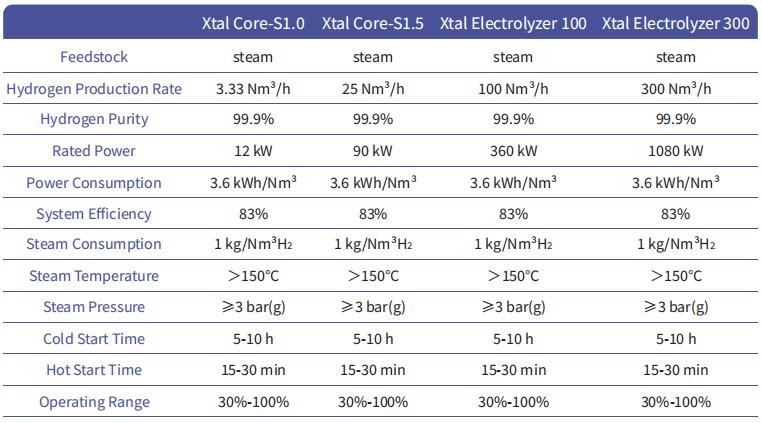
Product Application
1. Chemicals & Fuels — Extending Downstream from Green Hydrogen Production
Green methanol, green ammonia (synthetic ammonia), and refining hydroprocessing. Synthetic ammonia and methanol are the two downstream chemicals with the highest share of green hydrogen demand.
2. Industrial Decarbonization — Replacing Fossil-Based Reductants
Hydrogen metallurgy / direct reduced iron (green steel), glass and ceramic kilns, cement and building materials. Replacing coking coal in the steel sector is a "hard decarbonization" pathway — non-negotiable from a carbon standpoint.
3. Carbon Resource Utilization — Co-Electrolysis as the Killer App
CO₂ electrolysis into CO (recyclable back into chemical processes), CO₂ + H₂O co-electrolysis directly into syngas, and on-site utilization of industrial off-gases. Can be coupled with cement-plant and steel-plant flue gas, turning carbon emissions into feedstock.
4. Energy-System Coupling — Powered by Both "Electricity + Heat" Legs
High-temperature coupling with nuclear power, industrial waste-heat coupling (steel-mill / kiln waste heat used directly to drive the electrolyzer, further reducing electricity consumption), and renewable curtailment absorption.
6. Reversible Energy Storage (rSOC) — Bidirectional Electricity ↔ Hydrogen
A single stack that both electrolyzes hydrogen and operates as a fuel cell — electricity → hydrogen → electricity, long-duration peak-shaving storage, and on-site hydrogen production at refueling stations. Suited for long-duration energy storage and grid-flexibility resources; current penetration remains low.
7. Specialized & Distributed Scenarios
Closed-loop oxygen supply in aerospace and submarine environments (CO₂ → O₂), distributed combined heat and power (CHP), and microgrids / data-center backup. Small in scale, but high in unit price and fast in growth.
Industrialization cooperation case:SOEC Green Hydrogen Application Project in the Steel Industry
To reduce CO₂ emissions from the steel production process, the client leverages the green electricity resources available on site to explore a clean energy pathway of "green power to hydrogen, hydrogen blending to cut carbon."
We supplied and installed an approximately 24 kW SOEC system for the steel production plant, using green electricity from the grid to produce hydrogen, which is injected into the natural gas grid and supplied to the gas burners. The hydrogen output from SOEC is supplemented by PEM or alkaline electrolyzers to ensure a stable and sufficient hydrogen supply.
Project Value
Carbon reduction: hydrogen blending in combustion directly cuts CO₂ emissions in the production process;
Green energy: efficient utilization of green electricity from the grid, adding value to renewable power;
Demonstration: provides a replicable model for green hydrogen blending in the steel industry.
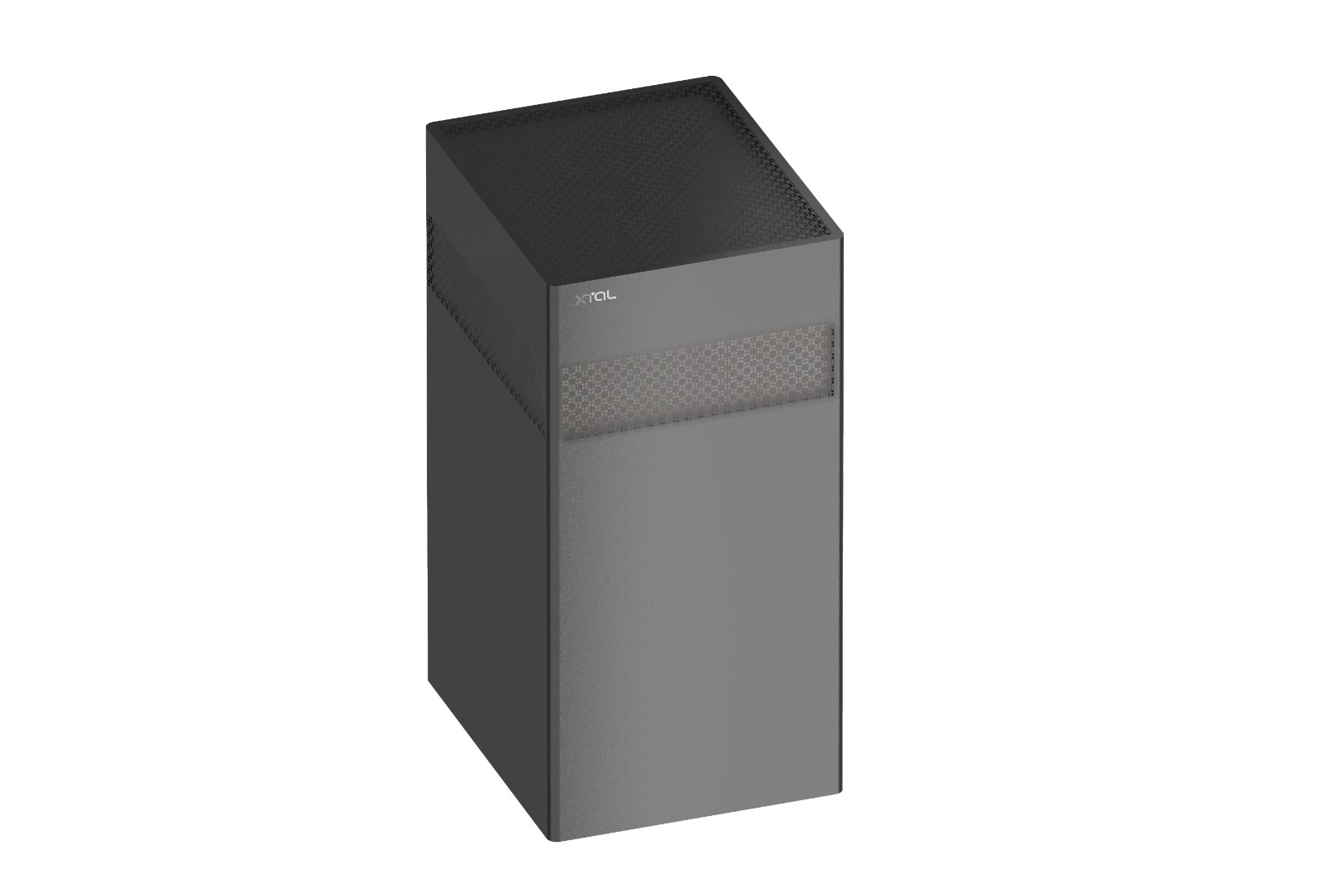
New Product2:XTAL Energy SOFC System
Product Introduction
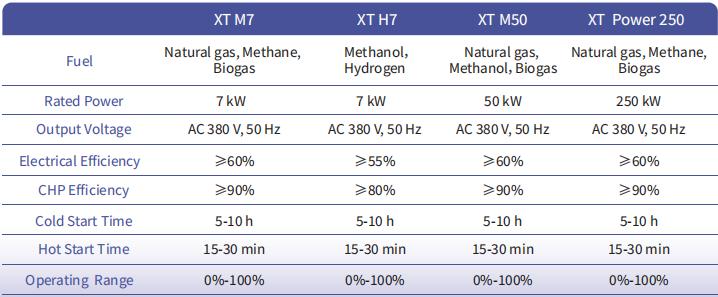
XTAL Energy’s self-developed SOFC system features a single-module power rating of tens of kilowatts, with the integrated system exceeding 100 kW. Adopting a modular design, it enables rapid “plug-and-play” deployment and supports capacity expansion via multi-module parallel connection.
As a new-generation high-efficiency clean energy power generation device, the Solid Oxide Fuel Cell (SOFC) leverages its cutting-edge technical architecture and core in-house R&D strengths. It delivers ultra-high energy efficiency, exceptional adaptability and environmental performance, alongside flexible off-grid standalone power generation capability to fully meet energy demands across diverse scenarios. Its core advantages are detailed below:
1. Ultra-high power generation efficiency, substantially reducing energy consumption costs;
2. Excellent fuel flexibility, compatible with existing energy systems;
Near-zero-emission clean power generation to advance carbon neutrality goals;
3. Fully self-developed system architecture balancing scalability and stability;
4. Deeply customized components engineered for extreme operating conditions;
5. High-efficiency closed-loop thermal management system to maximize overall energy efficiency;
6. Intelligent precision control strategies for reliable operation under complex working conditions;
7. Standalone off-grid power generation capability to resolve power supply challenges in special scenarios.
Product production capacity
The 10 MW pilot line upgrade will be completed in 2027, and a 100 MW production line is scheduled to be built and put into operation by the end of 2028.The company's "1 GW Annual Solid Oxide Energy System Project," with a total investment of RMB 1.207 billion (approx. USD 170 million), is progressing steadily.
Product Application
1.Data Center / AI Computing Power Power Supply
Power generation efficiency exceeds 60%. It features a small footprint and much shorter deployment cycle compared with conventional power plants and gas turbines. Capable of rapid load-following regulation, it can run on natural gas or hydrogen-blended fuels on-site, directly addressing three major pain points of data centers: power shortage, power rationing and carbon emission compliance assessment.
2.Commercial & Industrial Distributed Energy and Combined Heat and Power (CHP)
Applicable to commercial buildings, hospitals, hotels, schools, industrial parks and residential communities. High-grade high-temperature waste heat can be used for heating, cooling or steam supply. The combined cooling, heating and power (CCHP) overall energy efficiency reaches 80%–90%, while cutting power transmission and distribution losses.
3.Industrial and Oil & Gas Scenarios
Suitable for oilfield associated gas, LNG receiving terminals, refinery tail gas, waste hydrogen recovery in steel, glass and ceramic industries, landfill gas and biogas power generation. It can directly consume waste gases that would otherwise be flared or underutilized, delivering power while reducing carbon emissions and operational costs.
4. Microgrid, Off-grid and Backup Power
For islands, remote areas, communication base stations, military and emergency facilities. Coupled with PV and energy storage to form standalone microgrids, it mitigates unstable power at grid extremities and excessive grid extension investment.
5. Marine and Heavy-Duty Transportation Power
Used as auxiliary power units (APU) for large vessels and range extenders for long-haul heavy trucks. It reduces main engine idling, emissions and noise, ideal for applications demanding long endurance and high fuel flexibility.
Industrialization cooperation case
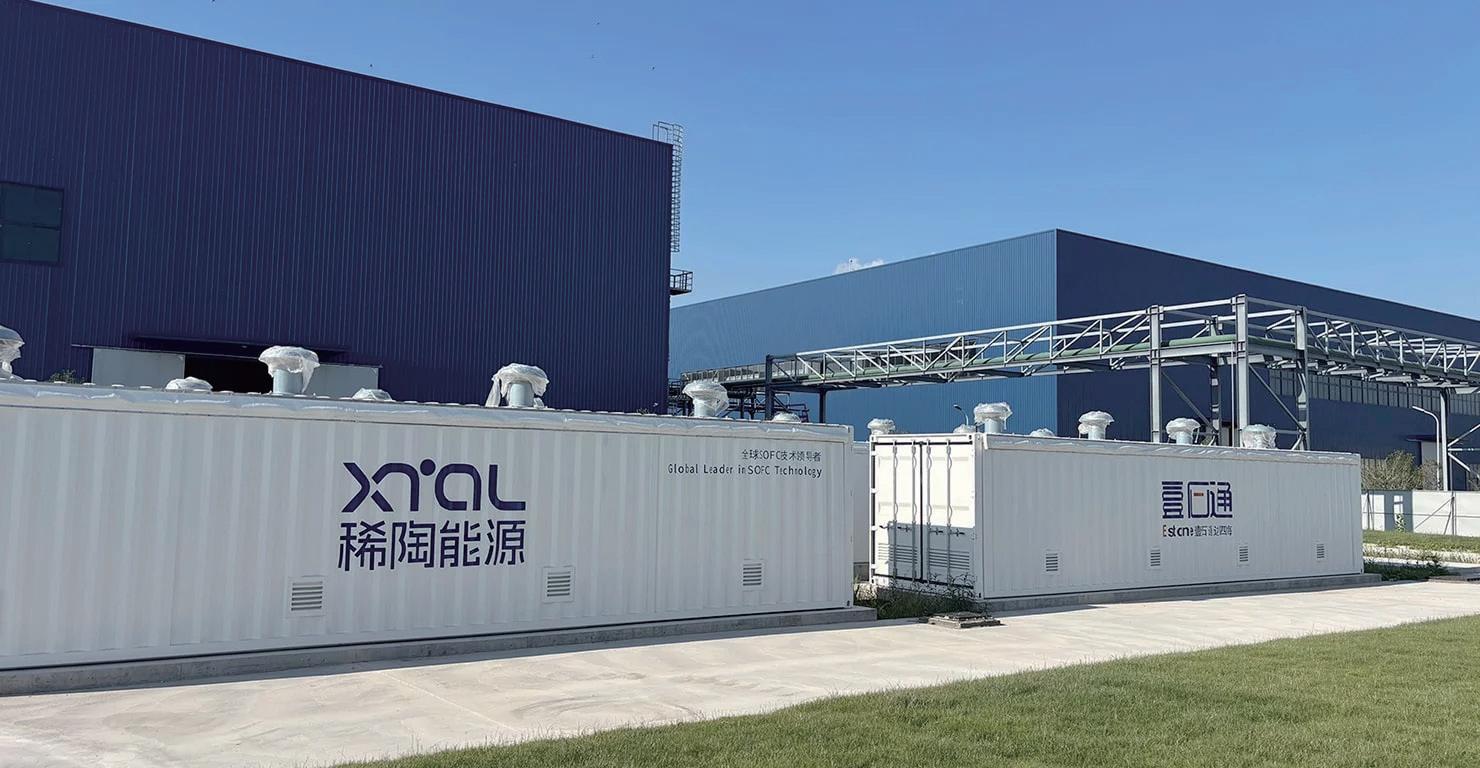
XTAL Energy’s solid oxide cell (SOC) technology demonstration project located in Bengbu, Anhui, represents a critical milestone for China’s SOC technology in its transition from laboratory research to large-scale and commercial operation, and it serves as a landmark demonstration project for the industry.
As the pilot phase of the gigawatt-scale “1 GW annual production solid oxide energy system” project with a total investment of 1.207 billion RMB, this demonstration project boasts an advanced scale and fully validates the full-stack in-house R&D technology chain covering materials, stacks and systems. Its power generation efficiency has exceeded 60%, ranking at the leading domestic level. It carries important practical and guiding value for advancing the industrialization of high-temperature fuel cell technologies in China.
Technically, XTAL Energy has achieved full-stack in-house R&D of cell stacks. Its SOFC system delivers over 60% power generation efficiency, markedly higher than the 34% average efficiency of conventional gas turbines. Under combined heat and power (CHP) mode, the system’s overall energy utilization rate can reach up to 90%.
The smooth advancement of this demonstration project marks the official entry of XTAL Energy’s SOFC technology into the engineering application stage, laying a vital practical foundation for subsequent large-scale commercial rollout.
The above information and images are sourced from: Xtal Energy
For more information, please follow our WeChat Official Account: 液态阳光、DT-SOFC-SOEC
Updated on October 28, 2026